
Automation vs. Augmentation: The Right AI Strategy to become AI-Native
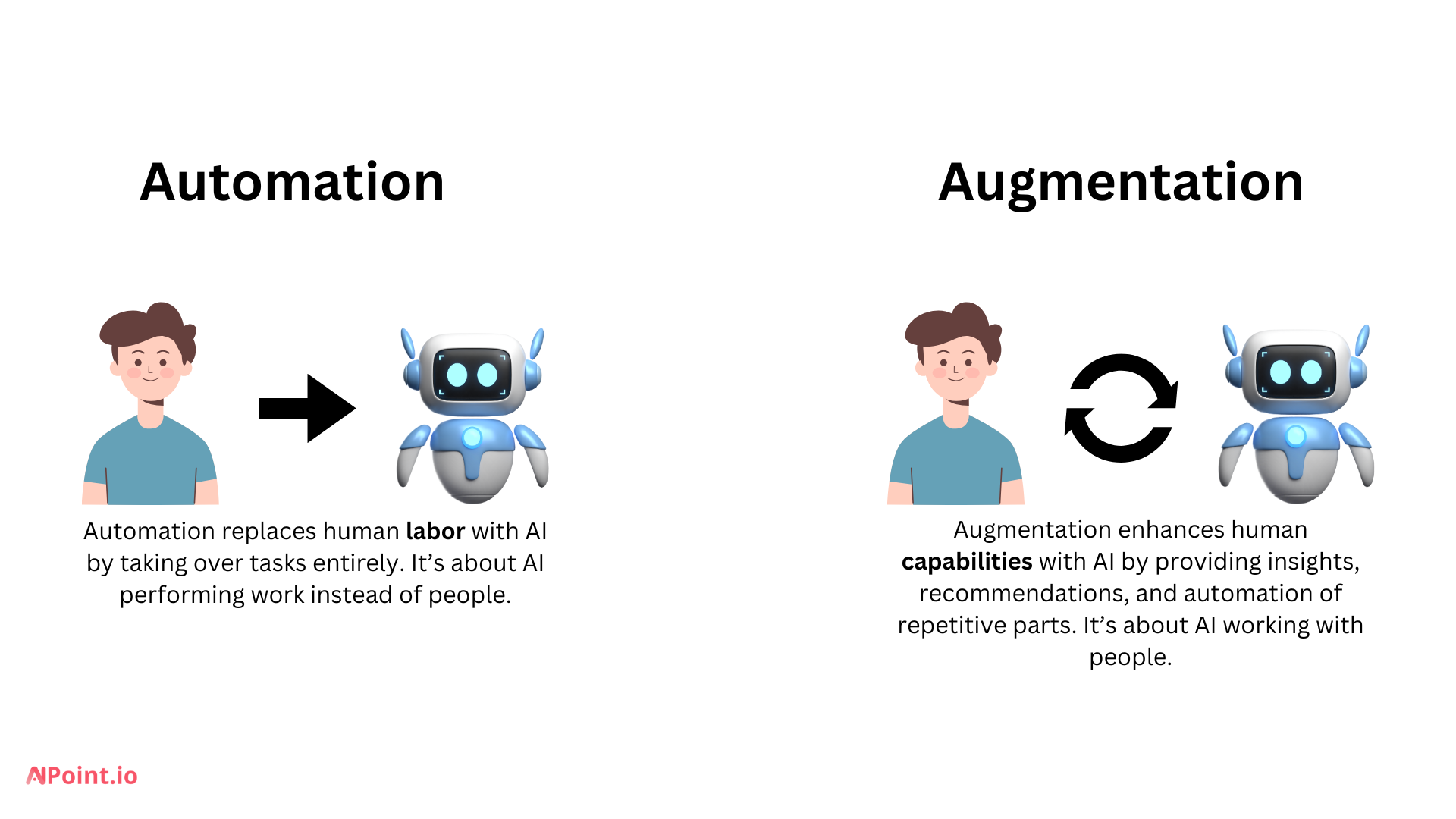

Automation vs. Augmentation: What’s the Difference?
When companies think about AI, they often picture full automation, machines taking over tasks that were once done by humans. And in some cases, that makes sense. But there’s another side to AI that’s often overlooked: augmentation, where AI supports humans rather than replacing them.
Automation: AI Taking Over Tasks
Automation is when AI fully takes over a process, typically one that is repetitive, structured, and rule-based. The benefit? It speeds things up, reduces human error, and cuts costs.
Common Automation Use Cases:
- FAQ AI Assistant handling customer enquires.
- Resume screening Agent to filter job applicants.
- OCR Content Extractor Agent to extract data from scanned documents.
When Should You Automate?
- When tasks are high-volume and don’t require human judgment.
- When speed, efficiency, and accuracy matter more than personalization.
- When reducing manual effort directly improves scalability and cost savings.
Augmentation: AI Empowering People
Augmentation, on the other hand, is when AI works alongside humans to help them be more effective. AI doesn’t replace the decision-making process, it enhances it by providing insights, recommendations, and automation of repetitive parts of a task.
Common Augmentation Use Cases:
- Deep research assistant that pulls relevant insights from multiple sources, saving hours of work.
- Code assistant that generate suggestions but leave final decisions to developers.
- Onboarding voice assistant that provide interactive, engaging experiences for new employees.
Why Augmentation is a Smarter Strategy for AI Adoption
- People stay in control: AI handles time-consuming tasks, but humans make the key decisions.
- Improves employee experience: Reduces burnout by eliminating tedious work.
- Boosts productivity: AI enhances human capabilities rather than replacing them.
So, What’s the Right Approach?
The key is finding the right balance between automation and augmentation.
Where to Start:
- Identify tasks that drain productivity: What’s taking up too much of your team’s time? Look for manual, repetitive processes that could be automated or AI-assisted.
- Engage your team early: Employees fear automation when they don’t understand its value. Show them how AI supports their work rather than replacing them.
- Test small, scale fast: Start with one AI-enhanced process. Get feedback, adjust, and expand AI integration over time.
AI Adoption Without Resistance
The biggest roadblock to AI adoption isn’t technology, it’s mindset. Teams resist AI when they think it’s about replacing them. But when they see how AI augments their skills, improves their workflow, and makes their work more meaningful, resistance turns into enthusiasm.
So, next time you explore AI for your business, ask yourself: Are we replacing people, or are we empowering them? That mindset shift is the difference between just using AI, and truly becoming AI-native.
Related Blog

Ready to Build
Your Pipeline?