
Key ROI Metrics for Generative AI from KPMG, Gartner & Boston Consulting


In this blog, I gathered a guide on how to get prepared to measure the ROI of Gen AI effectively before even implementing AI in your business.
Set clear business objectives
Instead of adopting AI for its novelty, define your goal. According to Boston Consulting Group, 45% of leaders expect AI to generate significant value, and 60% expect more in revenue growth. Most companies I worked with aim for the following metrics:
- Reduce the cost of operation
- Improved efficiency in enhancing customer experience
- Revenue Growth
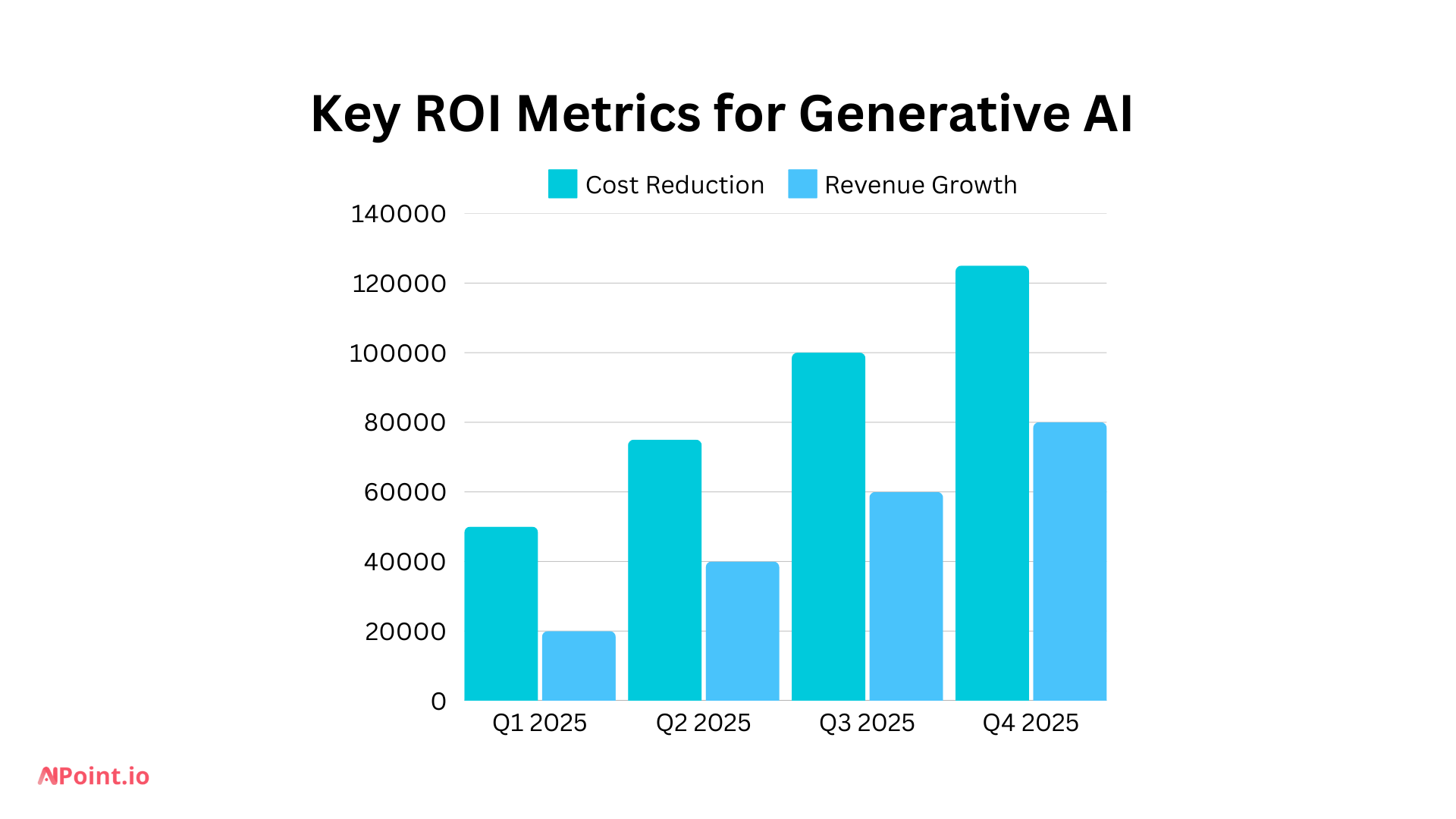
According to Gartner, some businesses consider productivity improvements but that may not be the source of differentiation over time. Companies can reinvest AI-driven time savings into higher-value work, such as training or innovation, to see greater long-term ROI.
Identifying Key Performance Indicators (KPIs) will help to measure success such as operational efficiency, customer satisfaction and sales growth.
Measure Current Performance Metrics
It is important before implementing AI, that businesses measure the performance of their current processes that AI will impact, for example, if you’re automating customer service, what is the response time for customer service to resolve a claim and what’s the customer satisfaction rate?
Estimate the costs of AI
Before implementing AI, evaluate the process and estimate the initial cost such as:
- Initial investment for cloud infrastructure
- Hardware and software
- Data gathering
- Training/outsourcing
- How long take AI to deliver tangible results
- Maintenance and monitoring
Quantify benefits
When the AI plan is ready to execute, consider tracking the following metrics:
- Revenue growth
- Calculate the cost saved through automation
- Labor cost
Additionally, measures the impact of AI on customer experience and the productivity of the team.
Risk Factors
Similar to any other project AI projects are prone to risk, it is important to take implementation risks into account such as
- Data quality/availability issues (Impact: 10-30% cost increase)
- Integration challenges with existing systems
- Security vulnerabilities and compliance issues
- Market changes affecting AI value proposition
- Competitor AI implementations
- Increased operational costs
The simple formula to calculate ROI based on the above could be:
ROI = ((Total benefits – Total Costs) * Risk Factors / Total Investment) *100
By measuring these factors, you can determine whether AI initiatives are contributing to the business and driving profitability.
If you need help implementing these metrics for your GenAI project, our team offers AI workshops, custom solution development, and AI agents to help you achieve measurable ROI. Let’s start your AI journey and take the first step together toward building your AI-powered future.
Reference:
https://www.bcg.com/publications/2024/wheres-value-in-ai
https://www.cfodive.com/news/companies-roi-metrics-generative-ai-kpmg/730520
Related Blog


Ready to Build
Your Pipeline?