
Voice AI Sales Engine: The Future of Outbound for Australian B2B Teams (2026)

What Is a Voice AI Sales Engine?
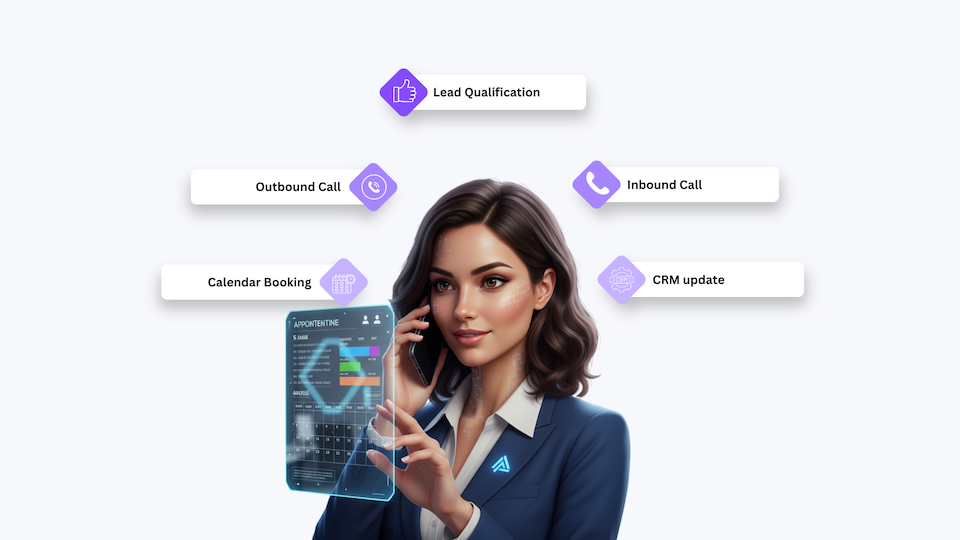
A Voice AI Sales Engine is an AI-powered system that conducts outbound phone calls autonomously — researching prospects, initiating calls, qualifying leads, handling objections, and booking meetings, without a human rep on the line.
It's not a robocall. It's not a pre-recorded message. Modern voice AI agents in 2026 use large language models to hold dynamic, two-way conversations that adapt in real time to what the prospect says. They can answer questions, handle objections, acknowledge hesitation, and transfer to a human when a conversation reaches a decision point.
The difference from traditional auto-diallers is fundamental: those played a script. Voice AI listens, understands, and responds.
The Numbers That Are Turning Heads
The voice AI market hit $22.5 billion in 2026, growing at 34.8% CAGR. But the numbers that matter for sales teams are operational:
- Contact rates increased by 62% in documented deployments vs human SDR teams
- Cost per qualified lead dropped by 41% for companies running AI voice outbound
- Voice AI costs approximately $0.40 per call vs $7-$12 per call for human agents — a 90-95% cost reduction
- 30-40% contact rates achieved consistently vs 5-10% for human cold calling in Australia
- 3-year ROI between 331% and 391% for properly implemented voice AI systems
- Production deployments grew 340% year-over-year across 500+ organisations globally
For context: a human SDR in Australia costs $70-90K per year including super, tools, and management overhead. A voice AI system running equivalent call volume costs a fraction of that — and never calls in sick, never has a bad week, and scales instantly.
Where Voice AI Outbound Works Best
Not every use case is equal. The scenarios where voice AI consistently outperforms human callers:
High-Volume Follow-Up
The biggest revenue leak in most Australian B2B businesses isn't cold outreach — it's follow-up that never happens. Leads that came in through your website, attended a webinar, downloaded a guide, or were quoted six months ago and went quiet. A human team can't follow up with 500 leads within 10 minutes of them going cold. A voice AI system can.
Research shows responding to an inbound lead within 5 minutes makes you 100x more likely to connect than responding after 30 minutes. Voice AI closes that gap permanently.
CRM Reactivation
Thousands of contacts in your CRM haven't heard from you in 12+ months. Some of them are ready to buy right now — you just don't know which ones. A voice AI agent can work through that database, have a brief qualifying conversation with each contact, identify who is in-market, and route hot leads directly to your calendar. What would take a human team weeks takes voice AI days.
Appointment Reminders and Confirmation
No-show rates for B2B discovery calls in Australia average 20-30%. A voice AI system that calls to confirm 24 hours before, reminds an hour before, and follows up after a no-show can reduce that to under 10%. That's a 20% increase in pipeline velocity without a single new lead.
Initial Qualification
Before a prospect gets on a call with your senior team, a voice AI agent can ask the five qualification questions that determine whether they're worth the time — deal size, timeline, decision-making authority, current solution, and urgency. Only qualified prospects reach a human.
Where Voice AI Doesn't Work (Yet)
Transparency matters here. Voice AI has real limitations in 2026 that any honest agency should acknowledge:
Complex enterprise sales — multi-stakeholder deals with long procurement cycles still require human relationship management. Voice AI is not replacing enterprise account executives.
High-trust professional services conversations — a mortgage broker's client who wants to discuss their financial situation in detail needs a human. Voice AI can qualify and book the meeting; the human handles the conversation.
Industries with strict regulatory requirements — financial advice, medical, legal — the compliance requirements around who can say what to whom still require human oversight. Voice AI can operate in these verticals but needs careful script governance.
Accents and communication styles — Australian English is increasingly well-handled by modern voice AI, but regional accents and very casual speech patterns can still create friction. This is improving rapidly but worth acknowledging.
The Voice AI + CRM Connection
This is the use case that makes Voice AI an inevitable next step for any business that's done CRM optimisation work.
The sequence:
- CRM Optimisation — clean database, enrich with buying signals, fix deliverability
- Email + LinkedIn outreach — warm up prospects who are showing signals
- Voice AI follow-up — call prospects who opened emails but didn't reply, or who went quiet after an initial conversation
Each stage feeds the next. Voice AI doesn't replace email and LinkedIn outreach — it fills the gap between a warm prospect and a booked meeting. The combination delivers pipeline velocity that no single channel can match alone.
What a Voice AI Sales Engine Looks Like in Practice
For an Australian B2B company, a properly built Voice AI Sales Engine includes:
Prospect intelligence layer — the same signal-based targeting used in email and LinkedIn outbound. The AI only calls people who are contextually in-market, not random names from a list.
Conversation design — scripts that are built for your specific ICP, your industry language, and the most common objections you face. Not generic templates.
Compliance and governance — Australian Do Not Call Register integration, call recording consent, ACMA compliance, and human review of edge cases.
CRM integration — every call logged automatically, outcomes recorded, hot leads routed directly to calendar booking, pipeline updated in real time.
Escalation protocol — clear criteria for when voice AI hands off to a human. The AI handles qualification; your team handles closing.
Is Your Business Ready for Voice AI?
Voice AI outbound makes sense when:
- You have a database of 500+ contacts that need regular follow-up
- Your team is spending time on follow-up calls rather than closing conversations
- You have a high no-show rate on discovery calls
- You've already cleaned and enriched your CRM and need to activate it
- Your average deal value is $5K+ (the ROI math only works at meaningful deal sizes)
It's not the right fit yet if:
- Your database is under 500 contacts
- You haven't done basic CRM and data enrichment work
- Your sales process is highly consultative from the first touchpoint
The businesses that will benefit most from voice AI in ANZ are those that have already built the data infrastructure underneath it — which is exactly why CRM optimisation comes before voice AI in the AIPoint roadmap.
What's Coming for ANZ
In Australia and New Zealand, voice AI adoption in B2B sales is 12-18 months behind the US and UK. That's an advantage for early movers — the businesses building voice AI infrastructure now will have a significant head start before it becomes standard practice.
AIPoint is building the Voice Sales Engine for ANZ B2B teams — launching Q3 2026. If you want to be in the first cohort, join the waitlist here.
Related Blog

Ready to Build
Your Pipeline?