
AI Outbound vs Traditional Lead Generation in Australia: What Actually Works in 2026
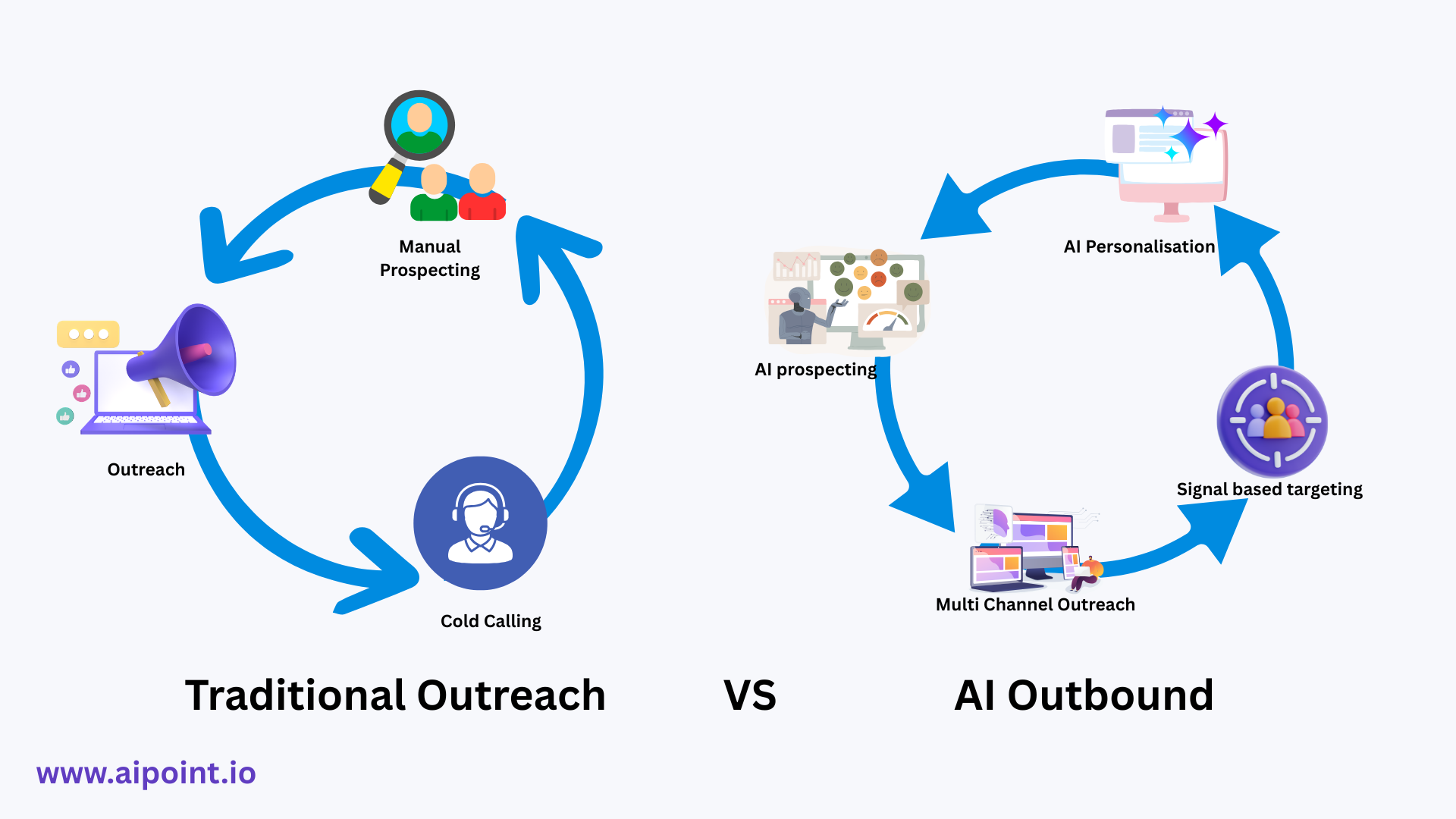

What "Traditional Lead Generation" Means in 2026
Traditional lead generation in Australia covers a few distinct approaches:
Cold calling — teams of SDRs or outsourced callers dialling through contact lists. Still used in enterprise sales, heavily offshore, expensive and hard to scale without quality degradation.
Generic email blasts — bulk email campaigns to purchased or scraped lists, typically using the same template for thousands of contacts. Open rates have collapsed — 10-15% is now considered acceptable where 30%+ was the norm five years ago.
Pay-per-lead services — buying leads from providers like BizLeadz, Lead-Wise, or comparison sites. Leads are often non-exclusive (sold to 3-5 competitors simultaneously) and have no context about why the prospect would want to hear from your business specifically.
Events and trade shows — effective for relationship-building, terrible for pipeline velocity. High cost, low volume, long follow-up cycles.
LinkedIn spray-and-pray — mass connection requests with generic messages, typically from tools that automate volume without personalisation. LinkedIn is now actively rate-limiting accounts that exhibit this behaviour.
What's Failing and Why
The numbers tell the story clearly:
- Generic cold email converts at 1-3% reply rate in 2026 — down from 5-8% in 2020
- Pay-per-lead bounce rates average 10-20% because list data isn't maintained
- Cold calling connect rates in Australia are below 5% due to mobile screening and caller ID rejection
- 79% of B2B decision-makers actively ignore cold direct messages on LinkedIn
The underlying problem isn't the channel — it's the approach. Traditional lead generation is built on volume: send more, call more, buy more lists. In 2026, volume without relevance is invisible.
What AI Outbound Does Differently
AI outbound isn't about sending more — it's about finding the right people at the right time and reaching them with a message that's relevant to their specific situation.
The three components that separate AI outbound from traditional approaches:
1. Signal-Based Targeting
Instead of building a list based on job title and industry and blasting everyone on it, AI outbound monitors real-time signals to identify when a specific prospect is likely to be in-market:
- Hiring activity — a company actively hiring sales reps has a pipeline problem
- Leadership changes — a new Head of Sales has a mandate to fix what wasn't working
- Funding announcements — a recently funded company is investing in growth infrastructure
- Tech stack changes — switching CRMs or adding sales tools signals a process review
- Content engagement — a prospect commenting on LinkedIn posts about your category is actively thinking about it
This means outreach goes to people who are contextually ready — not a cold list that's been sitting in a spreadsheet for six months.
2. AI-Powered Personalisation at Scale
Traditional personalisation means a human writes a custom first line for each email. It doesn't scale past 50-100 prospects per day per rep.
AI personalisation analyses each prospect's role, company, recent activity, and buying signals to generate a unique opening that's relevant to their specific context — at 500-6,000 prospects per month. Not a mail merge. Not a {first_name} token. A message that references something real about them.
The result: AI-powered personalised messaging delivers up to 7x better conversion from lead to opportunity compared to templated outreach.
3. Multi-Channel Orchestration
Traditional outreach picks one channel and hammers it. AI outbound coordinates across channels — LinkedIn connection + email sequence + follow-up — based on where each prospect is most active and most likely to respond.
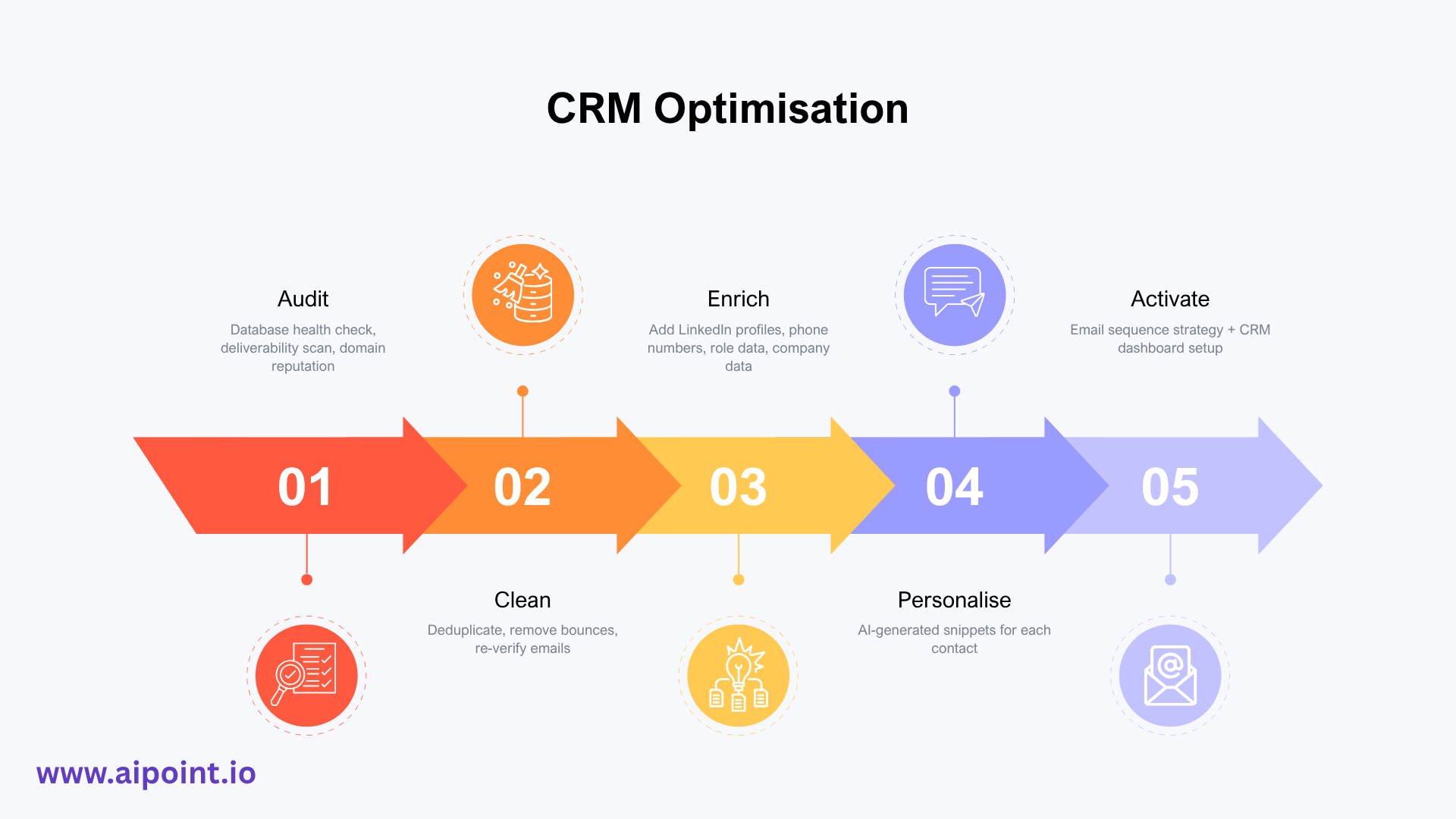
For Australian professional services (mortgage brokers, financial advisors), LinkedIn is the primary channel — 80% of ANZ B2B leads come from LinkedIn. For B2B SaaS and consulting firms, email + LinkedIn combined delivers the strongest results. For businesses with large existing databases, CRM reactivation sequences outperform cold outreach entirely.
The intelligence layer decides which channel, which timing, and which message — not a set-and-forget automation sequence.
The Honest Limitations of AI Outbound
This is where most AI agencies stop talking — and where AIPoint starts.
AI outbound at scale is not fully autonomous. The tools that claim "set and forget" pipeline generation are overselling. The reality:
Email deliverability is still a human problem. More volume means more domain risk. Inbox rotation, warmup, sender reputation management — none of this is automated away. A poorly managed sending infrastructure gets your domain blacklisted regardless of how good the AI copy is.
Copywriting quality degrades at volume without oversight. AI can personalise at scale, but the strategic judgment about which message angle works for which ICP still requires human expertise. At 500 prospects per month, AI copy works well. At 5,000 per month without oversight, reply rates collapse.
Signals are only as good as the interpretation. A funding announcement is a buying signal — but only if you know what to do with it. The tools surface the signal; the strategy determines whether it's relevant for your ICP.
This is why the best AI outbound systems combine AI infrastructure with human strategy and oversight — not one or the other.
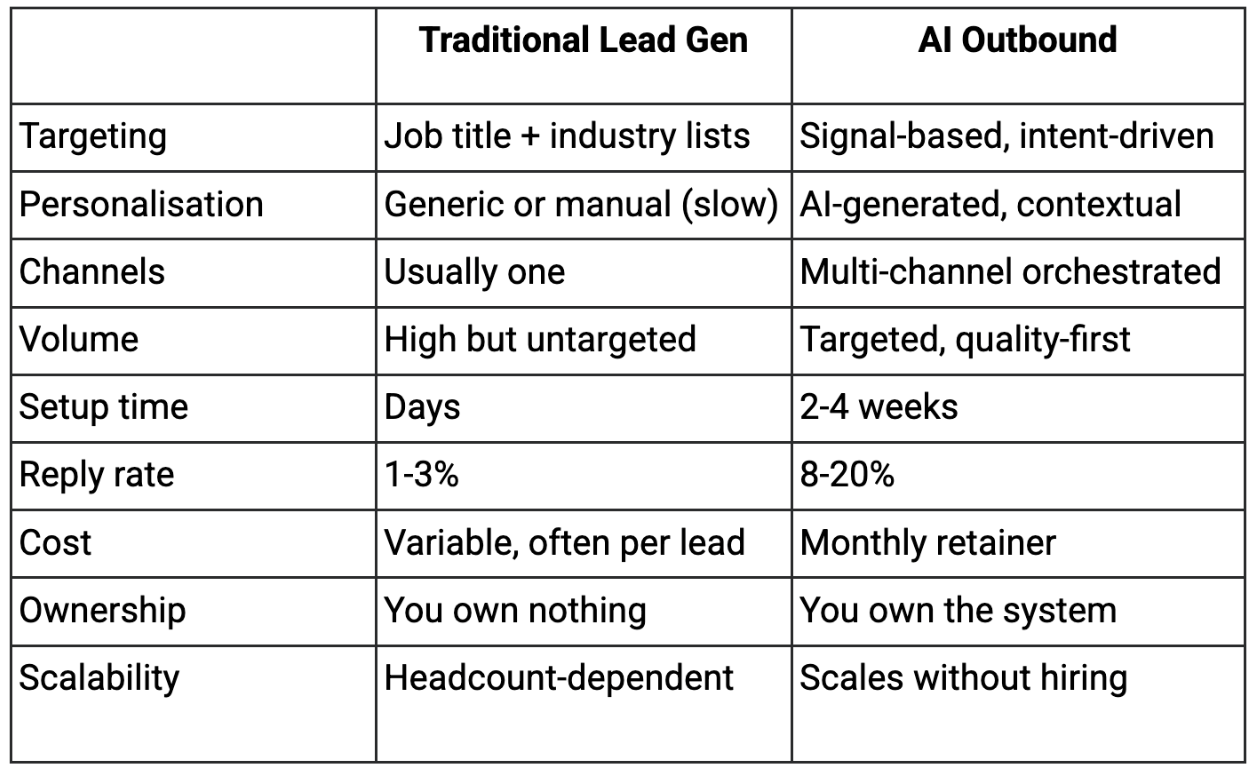
Head-to-Head Comparison
Which Is Right for Your Business?
Traditional lead generation still makes sense if:
- You need extremely high volume and brand awareness is the goal
- Your deal size is under $5K and you need pay-per-lead economics
- You're in an industry where cold calling is still accepted (construction, trades)
AI outbound makes sense if:
- Your average deal size is $5K+ and relationship quality matters
- Your sales team is spending more time researching than selling
- You've tried generic outreach and it stopped working
- You want to own the system, not pay per lead indefinitely
- You need pipeline that's predictable month-to-month, not campaign-by-campaign
For most Australian B2B companies — particularly in professional services, SaaS, and consulting — AI outbound delivers better quality pipeline at lower cost-per-meeting than traditional approaches, with the added benefit that the system compounds over time as it learns your ICP.
The Bottom Line
Traditional lead generation isn't dead — it's just increasingly expensive for decreasing returns. AI outbound isn't magic — it requires proper infrastructure, strategy, and oversight to deliver. The businesses winning in 2026 are the ones that combine AI-powered research and personalisation with human strategic judgment.
If you're an Australian B2B company evaluating outbound options, the question isn't "AI or traditional" — it's "are you building a system that gets smarter over time, or buying leads that expire?"
Book a strategy call with AIPoint to see what an AI outbound system looks like for your specific market.
Related Blog
Ready to Build
Your Pipeline?