
Voice AI: The Future of Sales Conversations
How a third touchpoint turned a silent prospect list into live conversations
Email gets ignored. LinkedIn messages sit unread. For most B2B outbound programs, that's where the prospect journey quietly ends. That’s not because the offer is wrong, but because the channel never reached the person.
This is what happened when we added an AI voice agent as the third touchpoint in Veridia's outbound sequence. Veridia is an NSW wholesale supplier selling into hospitality, entertainment, and accommodation venues. The voice call was never a separate campaign; it was the next step for a prospect who had already received a LinkedIn message and an email and had not replied to either. Across July and August 2026, 594 prospects reached that step.

The challenge
Veridia had a strong offer and a well-defined market. What they didn't have was a way to break through to decision-makers who live on the floor of a venue, not in an inbox. Venue managers, publicans, and operations leads spend their day moving, and they're not reading cold email at 9am.
Two channels were already running. The question was whether a third, higher-effort channel could be delivered at scale without adding headcount.
The approach
The voice agent was built as a continuation of the sequence, not a replacement for it. Prospects moved through the same journey in order, and the call only happened once the first two touches had gone unanswered, which means every person who picked up had already seen the name and the offer twice.
- Touch 1: LinkedIn connection and message.
- Touch 2: personalised email sequence.
- Touch 3: the AI voice agent calls only those who didn't respond, references the earlier LinkedIn message and email by name, and asks a single low-pressure question: is now a better time?
- Every call is logged end to end, who picked up, what was said, how long it lasted, and the next action and every action the agent reports is verified against the calendar, sent-mail log, and CRM before it counts.
The agent was never asked to close, and it was never asked to introduce the business cold. It was asked to reopen a conversation that had already started.
The results
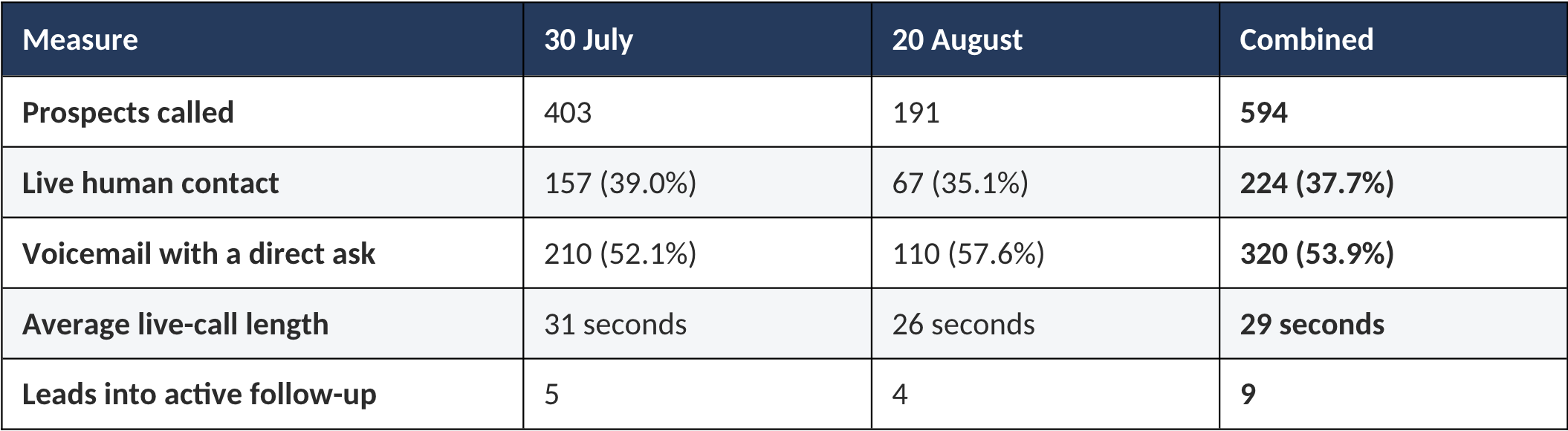
Almost every call made contact in some form. Roughly one in three calls reached a live human, and just over half left a voicemail with a specific, actionable ask: “call or email us back”. Combined, more than nine in ten calls delivered the nudge the campaign was built for, whether or not anyone picked up.
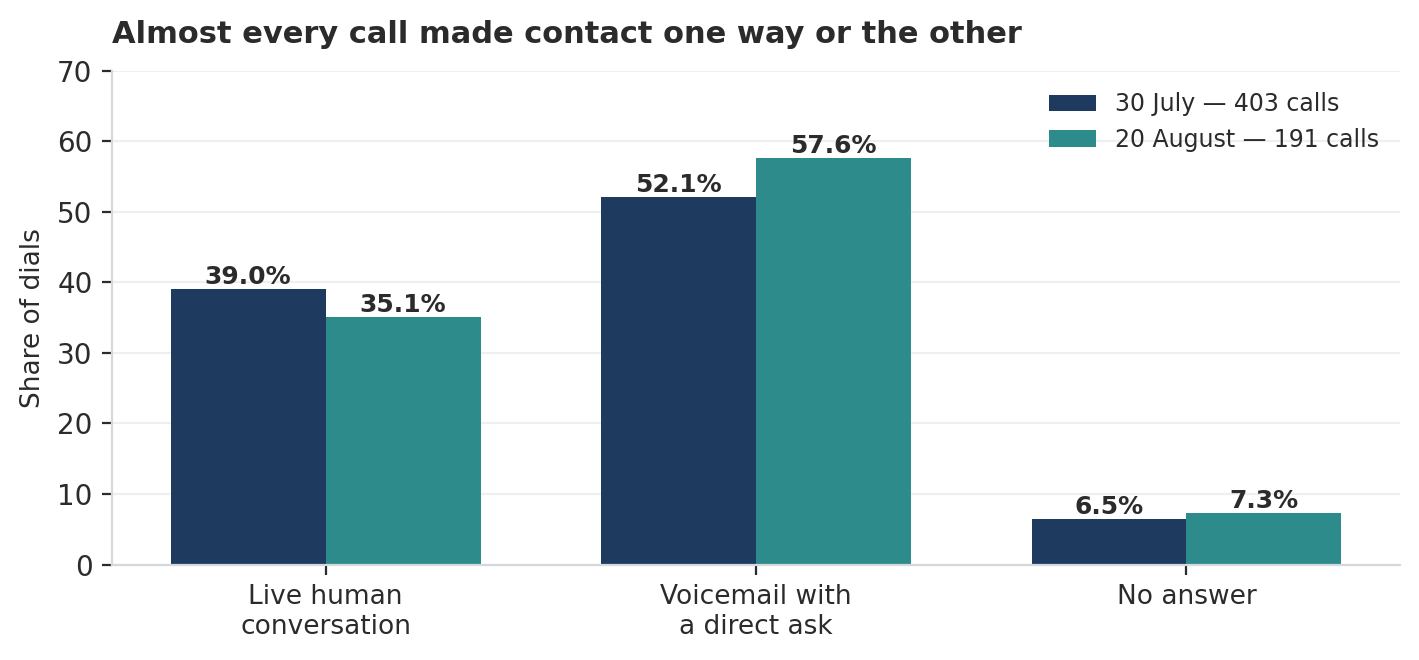
Figure 1 — Connection rates held steady across both rounds of outreach.
A voicemail is not a missed call
More than half of all calls ended in voicemail, and that is not a wasted call. A voice message does something an unopened email cannot: it puts a name, a company, and a reason to respond into a channel the prospect actually checks.
What we see repeatedly is that the voicemail sends people back to the earlier touches. A prospect hears the message, remembers the email or the LinkedIn request sitting unread, and replies there instead, on their own time, in the channel they prefer. The call doesn't have to be answered to do its job. It just has to remind someone that a real business is trying to reach them.
The compounding effect
Email and LinkedIn make the introduction. The voice call makes it real. Together they give a prospect three chances to engage and their choice of how, which is why the program's total response lift is bigger than the phone results alone suggest.
From a cold list to real conversations
The value of the voice layer isn't in the total call count. It's in what it recovered: 224 live conversations with people who had already declined to engage on two other channels, and nine of those converted into active sales follow-up for a rep who otherwise would never have had them on the calendar.
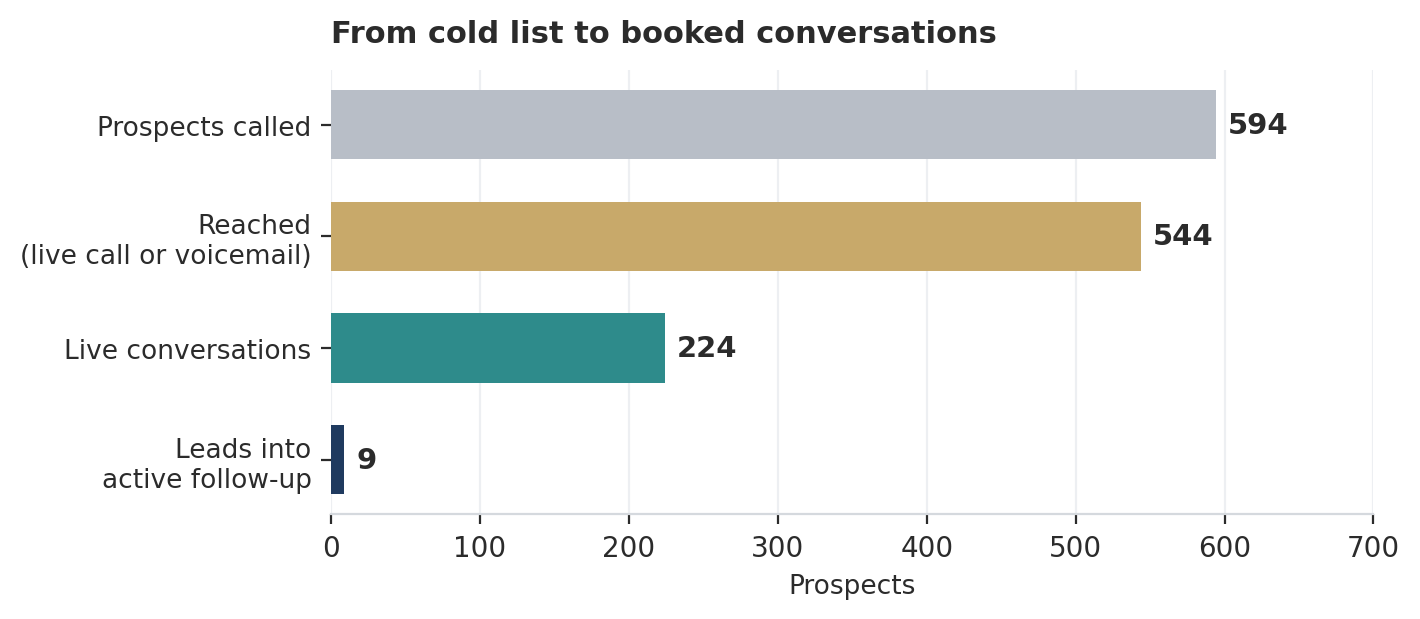
Figure 2 — Every stage represents prospects who had already gone quiet on email and LinkedIn.
What prospects actually did
Nine leads moved into active follow-up, and the shape of those conversions is the most interesting part of the result:
- Several prospects asked for the pricing guide to be sent through, which is a direct buying signal from a contact who had ignored the same offer in writing.
- One meeting was relayed and secured through a gatekeeper.
- A handful realised they were speaking with an AI and specifically asked for BD to call them back. Voice AI didn't cost the relationship, it created the opening for a human one.
A further 56 prospects were cleanly qualified out, wrong contact, wrong fit, or not buying, which is a result in itself. That's 56 records the sales team no longer has to chase.
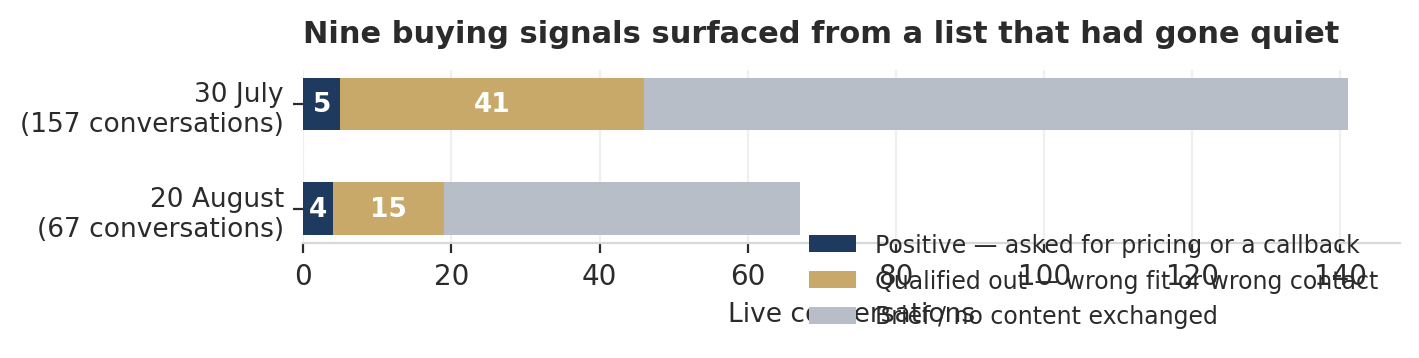
Figure 3 — Outcomes of live conversations, July and August.
Why it worked
- It reached a channel-blind segment. Some buyers will never reply to an email but will answer a phone. Those people are invisible to a two-channel program.
- It asked for almost nothing. A 29-second call asking "is now a bad time?" converts better than a paragraph asking for a 30-minute meeting.
- It ran at a cost no human dialer can match. 594 personalised follow-up calls, each one with a full transcript and a recorded outcome.
- Even the unanswered calls worked. Voicemail reactivated the email, and LinkedIn touches that had already been sent, giving prospects a second reason to look at them.
- It fed the human rep. Every positive outcome was handed to a person with the context already attached.
Where this is heading
Today, the agent runs a personalised script, a name, a company, a reference to a prior touch. The next version is a different category of thing: an agent working from a live knowledge base of the actual business.
- Real-time visibility of what's been sent to each prospect and whether it was opened.
- The live pricing and product catalogue instead of a fixed script line.
- Objection handling drawn from what has already worked with similar prospects.
- A genuine read/write connection to the calendar and CRM, so a booking is made, not just described.
That's the shift ahead: from a script that talks to something much closer to an actual sales conversation. The results in this case study came from the current version, and the direction of travel is clear.
The bottom line
Voice AI works cheaply and at scale for a genuinely valuable slice of the funnel: the prospects a two-channel program can't reach. It isn't a closer, and it was never asked to be. As a third touchpoint that recovers dead pipeline and hands warm conversations to a human, it earned its place in the program.
Figures drawn from Veridia's July–August 2026 outbound calling logs (594 total calls). Prepared by AIPoint — aipoint.io
Related Case Studies
Frequently Asked Questions

Ready to Build
Your Pipeline?